Indie Game Studio Porting a Flash Prototype to Android
Problem
The studio had a beloved but unplayable Flash prototype from 2010. Modern browsers had dropped Flash support entirely, and the original codebase was unmaintained. Rebuilding it from scratch in a modern stack looked like a 3-month commitment that didn't fit their budget.
Solution
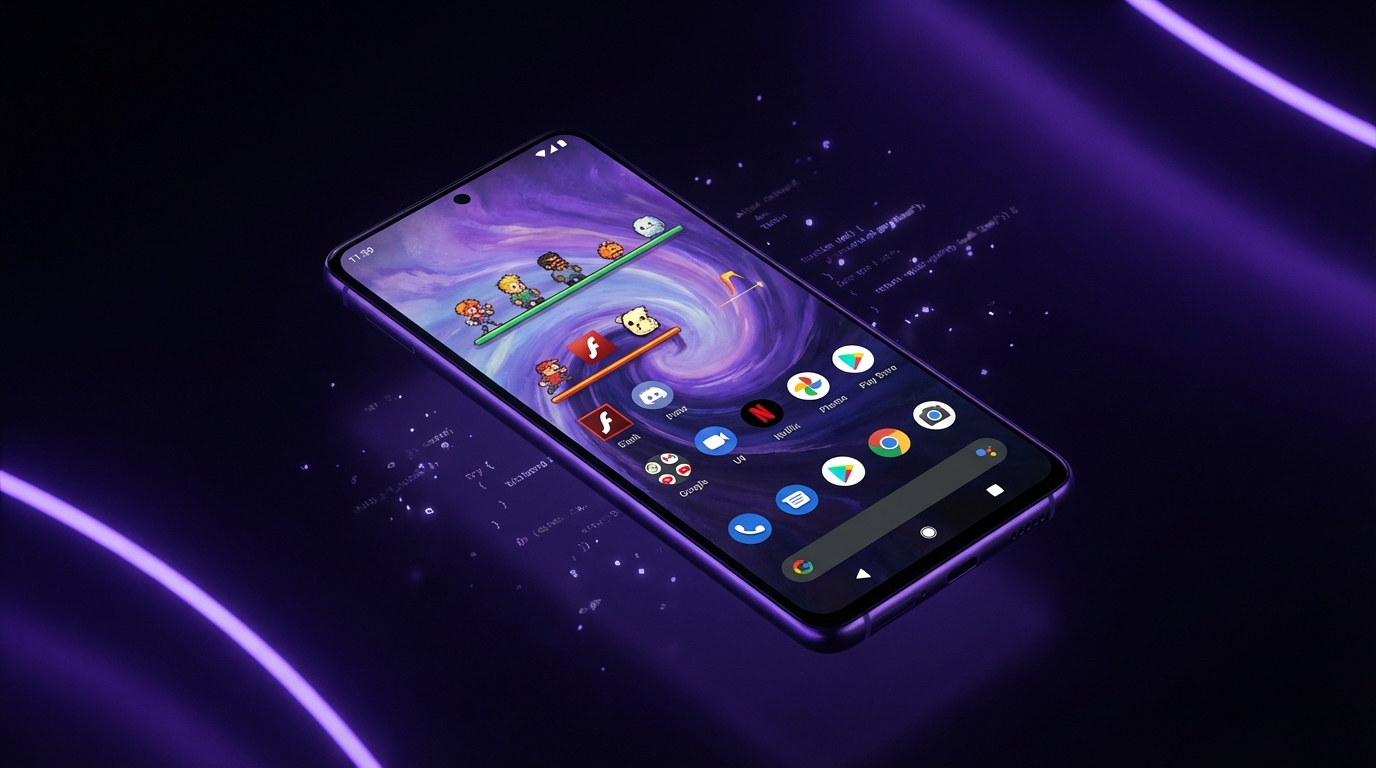
We used AI-assisted code translation to rebuild the core game loop in Kotlin + Jetpack Compose, kept the original art and sound, and shipped to Google Play in 21 days at roughly one-fifth the cost of a traditional port.
Workflow
Week 1: Recovered the original ActionScript source, documented the game state machine, and translated the core loop into Kotlin with Claude Code handling the rote conversion while the human dev reviewed every diff. Week 2: Wired up input, collision, scoring, and persistence. Rebuilt the UI chrome natively instead of trying to replicate the Flash HUD pixel-perfect — a deliberate modernization. Week 3: Play Store assets, privacy policy, policy compliance checks, closed beta with 15 original fans, final polish, and submission.
Why this worked
The studio had something most ports don't: a small, well-defined game. One screen, one loop, one scoring system. AI shines at translating constrained systems where the behavior is obvious. It struggles when the source code has ambient assumptions about its runtime.
What didn't translate
The original's frame-perfect collision timing used Flash's 30fps lock. On Android we had to rebuild that with a fixed-timestep simulation — not something AI volunteered, but something an experienced game dev immediately recognized. The takeaway: AI accelerates translation, not design.