Building Safe, Engaging Kids Content with AI
Kids content is the highest-stakes category in AI media. The audience is vulnerable, the platform rules are strict, and the quality bar for parents is unforgiving. Here is how we approach it at Gen Art Studios, and why we believe AI can make kids content better, not just cheaper.
Why Kids Content Demands Extra Care
Let us be direct: when you are creating content for children, the stakes are fundamentally different from any other category. The audience is impressionable. The parents are protective. The platforms are heavily regulated. And the consequences of getting it wrong are not a bad review — they are a child being exposed to something they should not see.
At Gen Art Studios, we operate the Gen Art Studios 4 Kids YouTube channel. We produce animated videos for young audiences — stories, educational content, and character-driven entertainment. Every piece of content goes through a process that prioritizes safety and quality above all else, including speed and cost.
This article explains that process in detail, because we believe transparency about how AI kids content gets made is as important as the content itself.
The Safety Framework
Before we talk about production workflows and creative process, let us cover the non-negotiable safety standards that govern everything we produce.
Platform Compliance
YouTube has specific requirements for content designated as "made for kids":
- COPPA compliance — No personalized advertising, no comments, no notifications, no community tab features
- Content restrictions — No violence, no fear-inducing content, no mature themes, no deceptive practices
- Metadata accuracy — Content must be accurately described and properly categorized
- No engagement manipulation — No misleading thumbnails, no clickbait titles targeting children
Content Review Protocol
Every video we produce goes through a multi-stage review:
- Script review — Is the narrative age-appropriate? Are the themes suitable? Is there any language or concept that could confuse or frighten a child?
- Visual review — Every frame is checked for unintended imagery. AI generation can occasionally produce artifacts, distortions, or visual elements that were not intended. These must be caught and removed.
- Audio review — Is the narration clear and age-appropriate? Is the music calming or appropriately energetic? Are there any jarring sound effects?
- Full playback review — Watch the complete video as a parent would. Does it feel right? Would you let your own child watch it unsupervised?
- Final approval — No video publishes without explicit human approval. There is no automated publishing pipeline for kids content.
What We Will Not Produce
Clear boundaries matter more than flexible creativity when children are the audience:
- No scary content — No horror, no jump scares, no menacing characters, no dark or threatening environments
- No violence — No fighting, no weapons, no injury, no destruction played for entertainment
- No adult themes — No romance, no mature humor, no references to adult content
- No deceptive content — No fake toy reviews, no manipulative "surprise" formats, no misleading educational claims
- No real-world danger imitation — Nothing that a child might try to replicate that could result in harm
The Creative Process
Within these safety boundaries, there is enormous creative space. Good kids content is joyful, colorful, imaginative, and educational. AI tools excel at producing exactly this kind of content.
Character Development
Consistent, lovable characters are the foundation of engaging kids content. Our characters are designed with specific principles:
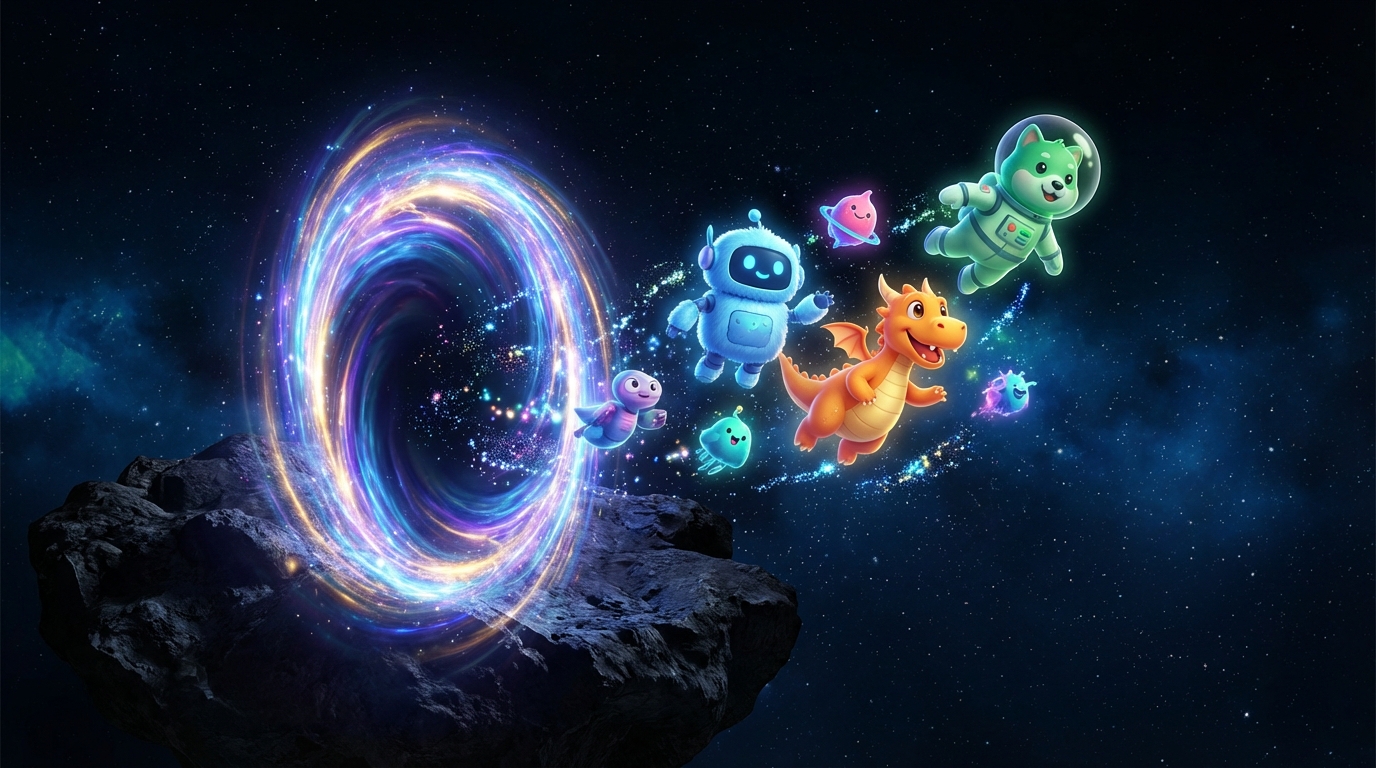
- Simple, clear designs — Young children respond to bold shapes, bright colors, and easily recognizable features
- Expressive faces — Large eyes, clear emotional expressions, friendly features
- Distinct personalities — Each character has a clear trait that children can understand and remember
- Positive role modeling — Characters demonstrate kindness, curiosity, problem-solving, and friendship
Our portfolio includes characters like the animals in our Animals Cooking Like Humans showcase, the characters in our Wolf Mushroom Adventure (a playful Three Little Pigs parody), and the energetic Kangaroo Mascot character. Each was designed for maximum appeal to young viewers while maintaining our safety standards.
Story Structure for Young Audiences
Kids content has specific narrative requirements that differ from adult content:
- Short attention spans — Segments should be 2-5 minutes for preschool, up to 10 minutes for early elementary
- Clear conflict and resolution — Simple problems with positive solutions that children can follow
- Repetition — Young children learn through repetition. Key concepts should be reinforced, not just mentioned once
- Pacing — Slower than adult content. Give children time to process each scene and concept
- Positive endings — Every story resolves positively. Characters learn, grow, and end up happy
Educational Integration
The best kids content teaches without feeling like a lesson. We integrate educational elements naturally:
- Problem-solving scenarios — Characters face challenges that model logical thinking
- Social-emotional learning — Stories about sharing, empathy, dealing with frustration, and making friends
- Foundational concepts — Colors, shapes, numbers, letters, and basic science woven into narratives
- Cultural exposure — Diverse characters and settings that introduce children to different perspectives
The Production Pipeline
Here is how a typical kids video moves from concept to publication.
Week 1: Concept and Script
Define the educational goal, target age range, character involvement, and narrative arc. Write the full script including dialogue, narration, and scene descriptions. Review the script against our safety framework.
Week 1-2: Visual Production
Generate character frames, backgrounds, and scene compositions using AI tools. This is where the volume advantage of AI becomes clear — we can produce visual environments and character poses that would take a traditional animation team weeks to illustrate.
Every generated frame is reviewed for:
- Character consistency
- Age-appropriate imagery
- Visual quality and clarity
- Color palette suitability (bright, engaging, not overstimulating)
Week 2: Animation and Motion
Assemble frames into animated sequences. Add motion, transitions, and visual effects appropriate for the target age group. Kids content animation should be smooth and gentle — no rapid cuts, no strobing effects, no disorienting camera movements.
Week 2: Audio Production
- Narration — Clear, warm, appropriately paced voice narration. For kids content, vocal quality matters enormously — the voice should feel friendly and trustworthy.
- Music — Original music produced in-house, designed for young audiences. Bright, melodic, and never abrasive. We use our own AI music production pipeline (the same one we use for Spotify releases) tailored for kids-appropriate styles.
- Sound effects — Gentle, fun sound effects that enhance the story without startling. No loud impacts, no sudden noises.
Week 2-3: Review and Publication
Full review cycle as described in the safety framework above. If anything fails review, it goes back to production — no exceptions. Once approved, the video is uploaded with proper "made for kids" designation, accurate metadata, appropriate thumbnail, and complete description.
What Makes AI Uniquely Good for Kids Content
Counterintuitively, AI has specific advantages for kids content that go beyond cost and speed:
Infinite visual variety. Traditional animation is expensive, so kids shows tend to reuse backgrounds, limit character designs, and recycle scenes. AI generation allows unique, detailed environments for every scene without the cost penalty.
Rapid character iteration. Finding character designs that resonate with young viewers requires testing many options. AI lets us explore dozens of design directions before committing.
Consistent safety. AI-generated content does not have the human risks that have plagued kids content creation — no inappropriate improvisation, no off-script behavior, no behind-the-scenes controversies that taint the content.
Scalable production. A single production team can maintain multiple series simultaneously, which means more content variety for young viewers rather than a single show stretched thin.
The Future of AI Kids Content
We believe AI-produced kids content will become a major segment of children's media within the next two to three years. The quality is already there. The cost advantages are dramatic. And the demand for safe, educational content for young audiences is essentially unlimited.
The studios that will lead this space are the ones that treat safety as a foundational requirement rather than a compliance checkbox. The technology makes production easier. It does not make responsibility easier. That part remains entirely human.
At Gen Art Studios, every kids video we publish is something we would genuinely be comfortable showing to our own families. That is the bar, and it does not move regardless of how efficient the tools become.
If you are an educational organization, a children's brand, or a creator looking to produce safe, high-quality kids content, we would welcome the conversation. This is work that matters, and we take it seriously.
Gen Art Studios
AI-powered creative studio building apps, videos, music, and marketing assets.